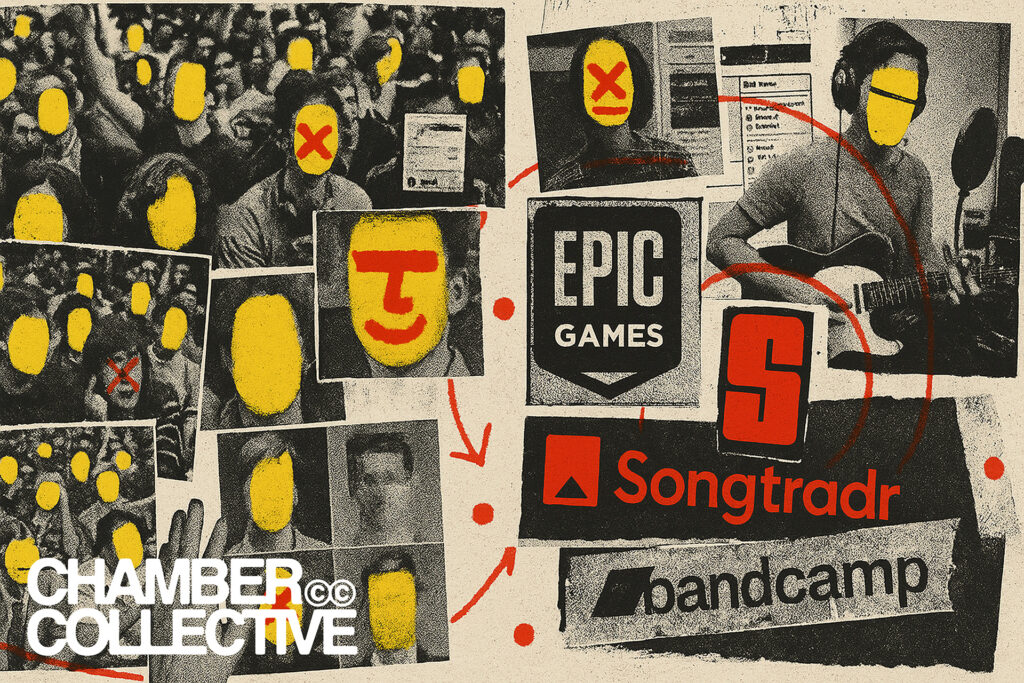
When The Weird Kid Goes Corporate: Bandcamp's Fading Identity
Written by Adelia Clarke
5 May 2025
Conception
If you love music, like me, there is a good chance you know about the music marketplace platform, Bandcamp. Today, it is still the best go-to place for fans to directly support artists (and labels alike), with an average of 82% of that supported amount landing in the creators pocket (after Bandcamp's 10% cut and processing fees). "Bandcamp is an online record store and music community where passionate fans discover, connect with, and directly support the artists they love." - Bandcamp Mission As an aspiring artist myself, I have found relative success as a small side hustle selling my original music, edits, remixes on the platform since 2015. Combining all my revenue I've made from other streaming platforms (Apple Music, Spotify etc), I've earned about 10 times more revenue from my supporters on Bandcamp. To date, Bandcamp has paid artists and labels over $1.46 Billion. Surely, quite a wonderful statistic to read. So, that means the platform works right? I mean, yes, but it's a little more complicated than that…
Birth
I've always gravitated towards Bandcamp and their ethos of how they operate; and their stance on going against the normalised subscription model that we are all fairly used to nowadays.
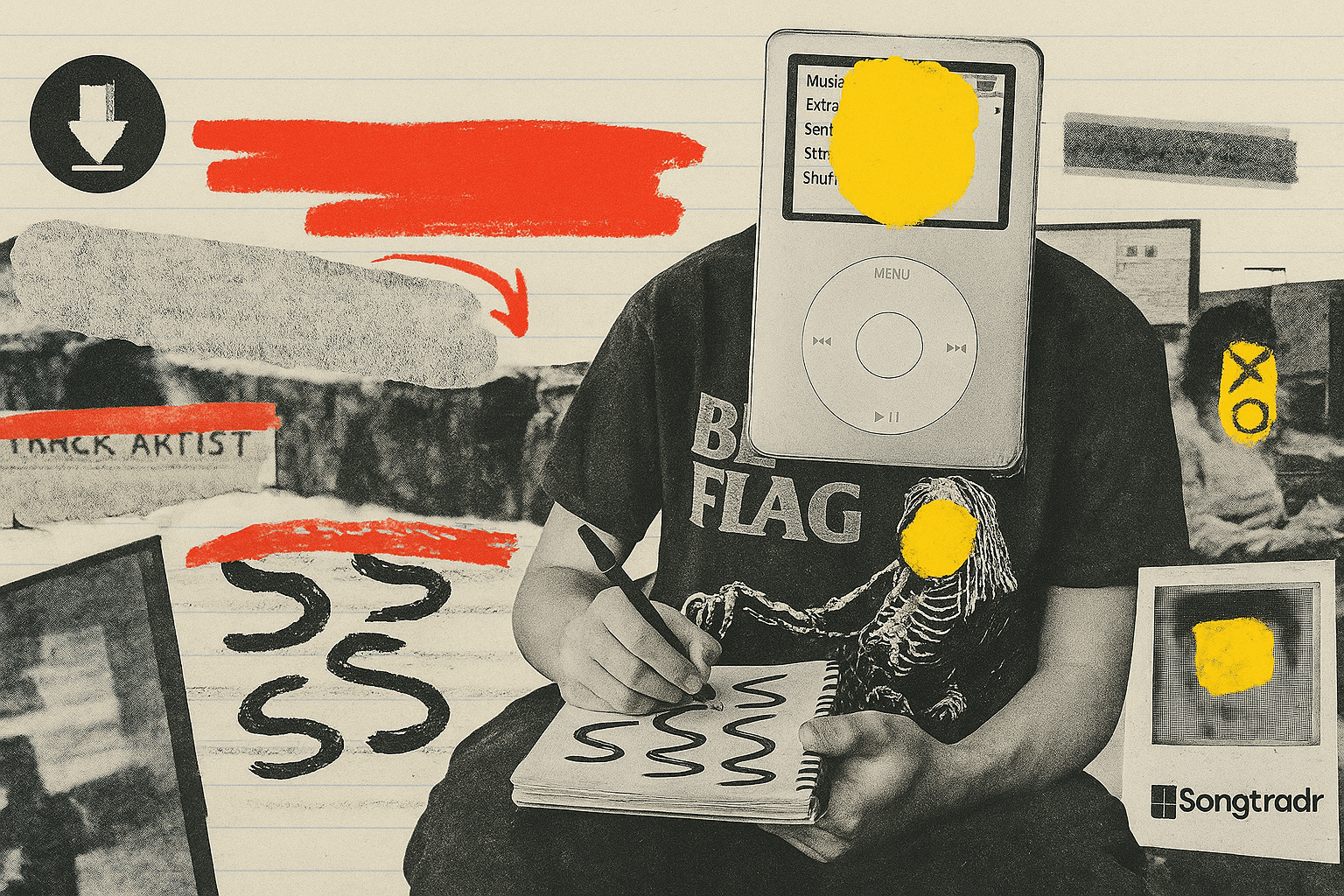
Bandcamp was that weird kid in the back of the class, wearing a shirt 4 sizes too big, drawing those S obscure shapes with their half-eaten pencils, and listening to Third by Portishead on their iPod Classic, the U2 Special Edition one.
To me, that's how I imagine Bandcamp in my head, that kid in the room who actually wants to do something different, and be different, not out of a formidable need, but for the sake of doing something different.
As the internet was evolving in the mid 2000s, going through its angsty pre-pubescent stage, music consumption was changing, MP3's were in, CDs were slowly going out, and all of a sudden, a whole new door opened.
Before you could say "Yeah, I actually have that on vinyl" —You could download that definitely legit song your friend showed you at school, titled 'linkin_park_feat_eminem_and will_i_am_numb.mp3'. If you successfully avoided the trojan viruses, and all those lonely hot milfs in your area, the song was yours, on your hard drive, to keep, forever.
To me, that feeling is, Bandcamp.
"This just kills me, because here's a relatively unknown band that deserves all the success in the world, made the admirable decision to do an entirely independent release, yet was tripped up by the sorts of aggravating technical issues familiar to anyone who's ever tried to build out their own website. What choice did they have though? They could have put their music up on MySpace or any of its dozens of imitators, but all of those services offer bands what is essentially a sharecropping arrangement." - Ethan Diamond, Bandcamp Co-Founder, 2008
Adolescence
In March 2022, Bandcamp was acquired by Epic Games, the creators of Fortnite and Unreal Engine. Epic made the clear statement that Bandcamp would continue to operate as a standalone platform, aiming to support a fair and open internet and to assist in building out Epic's creator marketplace ecosystem.
But, in all honesty, we've seen it happen more than once; when a massive company swoops in to buy your beloved indie platform, there's always that pit in your stomach, that voice in the back of your head saying, "Well, fuck.."
Epic Games wasn't just any company, either. This was the behemoth that turned an entire generation of kids into flossing, battle royale obsessives and V-Bucks microtransaction addicts. This is the same company that had been embroiled in a highly publicised legal battle with Apple over App Store fees, a David vs. Goliath story, except in this version, David was actually a multi-billion pound corporation with its own axe to grind.
The announcement came with all the usual corporate wishy washy reassurances. Epic's VP of Store, Steve Allison, declared that Bandcamp would "play an important role in Epic's vision to build out a creator marketplace ecosystem for content, technology, games, art, music and more." I mean sure, sounds great? Like your favourite coffee mum & pop shop being bought by a luxury hotel chain, promising to "maintain its authentic charm" while making certain there was an ice matcha latte with golden flakes on the menu.
To their credit, Epic did initially maintain a hands-off approach. Bandcamp Fridays continued. Artists still received their fair share. The interface remained refreshingly unchanged, that same endearingly clunky unoptimised design that felt like it was built by actual humans rather than an algorithm somewhere on a server.
But something was off…
The Bandcamp community, a vibrant mix of noise artists, bedroom producers, indie bands, and the fans who love them; all collectively held their breath. Would the platform that had been their digital home, their refuge from the streaming giants, slowly morph into something unrecognisable? Would we soon be buying B-Bucks to unlock exclusive artist content? Would there be Fortnite character skins of Godspeed You! Black Emperor?
Adolescence: Corporate
The early days post-acquisition were a strange limbo period, like watching your favourite independent coffee shop after it's been bought by that luxury hotel chain. The coffee still tastes the same, the baristas with their cyber-siglism tattoos are still there, but there's a new, sleeker sign out front and you can't quite shake the feeling that something fundamental has shifted.
Epic Games had positioned itself as something of a champion for creators in its battle against Apple's App Store fees, arguing for a more open digital marketplace. In theory, this aligned with Bandcamp's ethos of giving artists control and fair compensation. But theory and practice often diverge when billion-pound corporations enter the equation.
Behind the noise, Bandcamp employees were increasingly uneasy. The promised autonomy felt tenuous. Decision-making processes became more opaque, with directives coming down from Epic's headquarters with little explanation or context. The soul of Bandcamp, its commitment to artists and community over profit maximisation, seemed at risk of corporate dilution.
It wasn't just employees feeling the shift. Artists and labels themselves began noticing subtle changes in how the platform operated. Support tickets took longer to resolve. The editorial team, once the beating heart of Bandcamp's music discovery ecosystem, seemed to have less freedom to champion truly underground artists. The beloved Bandcamp Daily, which had spotlighted countless obscure gems, began featuring slightly safer, more marketable selections.
For users, the experience remained largely unchanged, but there was a palpable sense that Bandcamp was being slowly, almost imperceptibly, steered toward becoming something else, something more profitable, more scalable, less weird. And in the music world, 'less weird' is rarely a compliment.
Union Formation
By early 2023, the simmering concerns among Bandcamp staff had crystallised into action. In March, employees announced the formation of Bandcamp United, a union affiliated with the Office and Professional Employees International Union (OPEIU) Local 1010. The unionisation effort wasn't just about wages or benefits, though those were certainly factors, but about preserving the platform's values in the face of corporate suits.
"We are forming a union to ensure that Bandcamp remains a platform that puts artists first and is a positive force for change in the music industry," the union's mission statement declared. It was a move that resonated deeply with the Bandcamp community, artists, labels, and fans alike expressed overwhelming support.
The union's key demands reflected the philosophical foundation of Bandcamp itself: transparency in decision-making:
Protection of the artist-first business model.
Fair compensation for staff.
A commitment to diversity and inclusion.
In many ways, Bandcamp United was fighting to preserve what had made the platform special in the first place, its human-centred approach in an increasingly algorithm-driven digital landscape.
Epic's response was lukewarm at best. While they didn't openly oppose the unionisation effort, they didn't voluntarily recognise it either, forcing a formal vote. They made the message clear: Epic wasn't actively hostile to workers' rights, but neither was it eager to cede any control over its acquisition.
Meanwhile, rumours began circulating that Epic was already looking to offload Bandcamp. The gaming giant had recently announced layoffs amid what CEO Tim Sweeney called "spending more money than we earn," suggesting that perhaps the Bandcamp acquisition hadn't delivered the expected value. For a company focused on building a metaverse and competing with digital giants, a relatively small music platform may have suddenly seemed like a distraction from the core business.
The unionisation effort had inadvertently exposed a fundamental truth: Bandcamp's value as a community and platform for artists existed in tension with its value as a corporate asset. The very qualities that made Bandcamp beloved, its emphasis on fair compensation over growth at all costs, its willingness to remain somewhat niche rather than chase mainstream appeal, made it a challenging fit within a growth-oriented corporate structure.
The Songtradr Era Begins
In September 2023, the other snare finally dropped. Epic Games announced it was selling Bandcamp to Songtradr, a music licensing company that most Bandcamp users had never heard of. Even as I write this in 2025, I still don't know what Songtradr actually does.
The news came as a shock to both the community and employees, many of whom learned about the sale at the same time as the public.
Songtradr, founded in 2014, had built its business on licensing music for commercials, films, and other media, a fundamentally different model than Bandcamp's direct artist-to-fan sales platform.
Their CEO, Paul Wiltshire, offered reassurances similar to those Epic had provided a year and a half earlier: Bandcamp would maintain its identity, artists would still receive their fair share, and the platform's core mission would remain intact, blah blah blah.
But actions speak louder than corporate press releases. Within days of the acquisition, Songtradr announced layoffs affecting approximately 50% of Bandcamp's staff, including, in what seemed like more than coincidence, the entire union bargaining committee. It was union-busting so blatant it might as well have come with a glaring eye-sore of a neon sign, prompting Bandcamp United to file an Unfair Labour Practice charge with the National Labour Relations Board.
The layoffs cut deep into the departments that had given Bandcamp its distinctive character. The editorial team, responsible for discovering and highlighting obscure artists through Bandcamp Daily, was gutted. Customer support, which had been notably responsive compared to most digital platforms, was reduced to a skeleton crew. The engineering team, which had maintained Bandcamp's remarkably stable platform for years, lost key members who understood the system's idiosyncrasies.
For the Bandcamp community, it felt like watching a beloved local record store being turned into yet another soulless retail chain, only selling records of your Nirvana's (Remastered 2025), Sabrina Carpenter's, and John Summit's.
The outrage was immediate and vocal. #BoycottSongtradr trended briefly on social media. Artists and labels debated whether to leave the platform, weighing their principles against the practical reality that Bandcamp, even in its shitshow state, remained one of the few viable platforms for direct music sales.
Some prominent labels, like Sub Pop and Polyvinyl, issued statements expressing concern but ultimately decided to stay, citing the continued benefit to their artists. Others, particularly smaller, more politically conscious labels, began exploring alternatives, though none offered Bandcamp's combination of features, audience, and revenue share.
Corporate Adolescence Part II: The Songtradr Experiment
As the dust settled from the layoffs, Songtradr's vision for Bandcamp began to take shape. The new ownership emphasised expanding Bandcamp's licensing capabilities, unsurprising given Songtradr's core business. Artists were encouraged to make their music available for sync licensing through a new, all improved MSG-free integrated system, with Songtradr taking an additional percentage of any licensing deals.
For some musicians, this represented a welcome opportunity to monetise their work beyond direct sales. For others, particularly those with strong anti-commercial principles or concerns about how their music might be used, it felt like a fundamental shift away from Bandcamp's artist-controlled ethos.
The platform's interface, largely unchanged since the Epic acquisition, began to evolve. New features appeared, primarily oriented around licensing opportunities and data analytics for artists. The famously minimalist design became cluttered with prompts encouraging artists to opt into various Songtradr services. The homepage, once curated by the now-decimated editorial team, increasingly featured automated recommendations and promoted content.
Bandcamp's beloved "Discover" feature, which had previously been a remarkably effective way to find obscure gems based on a combination of human curation and listener behaviour, was quietly replaced with an algorithm that seemed suspiciously oriented toward pushing more commercial-friendly content. The beautiful randomness that had led countless listeners to discover their new favourite weird noise project from Kazakhstan was gradually homogenised.
Behind the scenes, the platform's infrastructure began showing signs of neglect. Outages became more frequent. Bug fixes took longer. The mobile app, never Bandcamp's strongest feature, but we understood why, remained essentially unchanged despite years of user feedback requesting improvements. It was the equivalent of your landlord raising rent, subtly nudging you to move out, so he can convert it into an AirBnb for the digital nomads.
br>
Yet through all this, Bandcamp's core feature, allowing artists to sell their music directly to fans with minimal intermediation, remained hopefully intact. The famous 82% revenue share stayed in place. Fans could still pay more than the asking price to support artists they loved. The community features, fan accounts, collections, wishlists, continued to function as before. It was as if Songtradr had acquired that coffee shop, introduced that gold flake matcha ice latte but kept the same cups and seats.
The Community Responds
As 2024 progressed, the Bandcamp community didn't passively accept these changes. A movement emerged among artists, labels, and fans determined to preserve what they valued about the platform.
Independent collectives formed to highlight music that might have been featured in Bandcamp Daily in the past. Websites like "Bandcamp Explorer" and "Deep Bandcamp Dives" emerged, run by volunteers who spent hours sifting through the platform to discover and promote overlooked artists. These community-driven curation efforts helped fill the void left by the diminished editorial team.
Labels began coordinating their release schedules around Bandcamp Fridays, which Songtradr had maintained, one of the few decisions universally applauded by the community. These days became de facto music holidays, with social media buzzing with recommendations and artists offering special discounts or exclusive content.
Many artists began including personal notes with their music, maintaining the direct connection with fans that had made Bandcamp special. Some created informal networks, cross-promoting each other's work in the absence of the platform's former discovery tools. The community, in effect, was recreating the human element that corporate streamlining had removed.
This resilience spoke to something fundamental about Bandcamp's place in the music ecosystem. It wasn't just a platform or a marketplace, it was a community that had developed its own culture, values, and practices. Songtradr had acquired the technology and the brand, but the spirit of Bandcamp existed in the connections between artists and fans, and those couldn't be bought or sold.
The Licensing Pivot
By mid-2024, Songtradr's strategy for Bandcamp became more clear. The company was leveraging Bandcamp's vast catalogue and artist relationships to build out its licensing business, positioning itself as a one-stop solution for brands and media companies seeking music for their content.
Songtradr introduced a tiered licensing system that automatically made all music on Bandcamp available for certain types of small-scale licensing unless artists specifically opted out. While artists received notifications about this change, the opt-out process was notably buried in account settings, leading many smaller artists to be unknowingly enrolled. I remember seeing the notification plastered on the home page, avoiding clicking it for as long as I could.
For major brands seeking music for commercial use, Songtradr created a premium search tool that allowed them to browse Bandcamp's catalogue with sophisticated filtering options based on mood, tempo, instrumentation, and other attributes. To their credit, the tool was remarkably effective, using AI to analyse music in ways that would have been impossible for Bandcamp's former human curators.
This pivot created strange new dynamics within the platform. Certain genres and styles that performed well in commercial contexts, inoffensive indie pop, cinematic post-rock, quirky ukulele music, began receiving more prominent placement. Artists who had previously thrived on Bandcamp's algorithm by creating distinctive, boundary-pushing work found themselves increasingly marginalised unless their music fit neatly into these cosy licensing-friendly categories.
Some artists embraced this new reality, deliberately creating music with licensing potential in mind. Others resisted, doubling down on their artistic vision even if it meant less visibility on the platform. The tension between art and commerce that has always existed in music took on a new dimension in this corporate-managed version of what had once been an artist-driven space.
For Songtradr, this strategy made perfect business sense. Bandcamp's catalogue represented an untapped resource of high-quality, rights-cleared music across every conceivable genre. By connecting this catalogue with their existing licensing infrastructure, they could create value for their primary customers—brands and media companies—while generating a new revenue stream for artists.
But for the Bandcamp community, it represented a fundamental shift in the platform's purpose. What had begun as a way for musicians to connect directly with fans was increasingly becoming a content library for commercial licensing. The artist-to-fan relationship that had defined Bandcamp was being subtly but significantly reoriented toward an artist-to-brand relationship, with Songtradr as the broker.
Bandcamp Fridays: The Last Vestige
Throughout all these changes, Bandcamp Fridays remained as the final bright spot. Initiated during the pandemic to help artists cope with lost touring income, these monthly events had become institutions in the indie music world. On the first Friday of each month, Bandcamp waived its revenue share, allowing artists to receive nearly 100% of sales.
Songtradr, recognising the enormous goodwill and publicity generated by these events, not only continued them but expanded their promotion. By 2025, Bandcamp Fridays had generated over £120 million in direct artist support, a figure prominently featured in the company's marketing materials.
The days became cultural events that transcended the platform itself, with music publications publishing recommendation lists, artists scheduling releases to coincide with them, and fans budgeting their music purchases around these dates. For many in the community, participating in Bandcamp Fridays felt like an act of resistance—a way to support artists directly despite the corporate machinations happening behind the scenes.
There was a certain irony in this. The initiative that had begun as a genuine response to artists' needs during a crisis had become both a marketing tool for a company engaged in questionable labour practices and a rallying point for the community opposing those practices. Both Songtradr and its critics could point to Bandcamp Fridays as evidence supporting their position.
For Songtradr, the events demonstrated their commitment to artists and willingness to sacrifice short-term revenue for the health of the community. For critics, the fact that these days generated so much activity highlighted how much artists and fans valued direct support, and how the platform's regular fee structure could be improved.
The truth, as often happens, lay somewhere in between. Bandcamp Fridays were both a genuine good, putting money directly into artists' pockets, and a convenient piece of corporate social responsibility that generated positive PR while costing relatively little. They were both a remnant of Bandcamp's more idealistic origins and a concession to the reality that even in a corporate-owned environment, some aspects of the community-driven model could be preserved.
Looking Forward: The Weird Kid Grows Up
As 2025 progressed, Bandcamp found itself at a crossroads. Songtradr had successfully integrated the platform's catalogue into its licensing business, creating new revenue opportunities. But the soul of Bandcamp—the direct, fan-to-artist relationship that had made it special—was increasingly at risk.
Remember that weird kid in the back of the class? The one with the oversized shirt, drawing obscure S shapes, lost in Portishead's "Third"? That kid has grown up now. Their clothes fit a bit better, perhaps too well. The pencil drawings have been replaced by sleek digital designs. The iPod is long gone, replaced by algorithmic recommendations and curated playlists.
But somewhere, beneath the polished exterior, you can still catch glimpses of that weird kid—in the passionate fans who still pay artists directly, in the community-driven curation efforts that have sprung up to replace the gutted editorial team, in the artists who continue to use the platform on their own terms despite the corporate overlay.
User metrics told a complicated story. Overall traffic to the site had declined somewhat, with some fans drifting away as the human curation and community aspects diminished. However, transaction volume remained relatively stable, suggesting that the core users, both artists and fans committed to direct support, were maintaining their engagement despite the changes.
The legal challenges mounted by Bandcamp United continued to work their way through the system, with labour boards and courts reviewing the union-busting allegations. These cases threatened not only financial penalties but significant reputational damage to Songtradr if ruled in the union's favour.
Within Songtradr itself, discussions were reportedly ongoing about Bandcamp's future. Some executives pushed for further integration of the platform into the company's licensing infrastructure, essentially treating it as a content acquisition channel. Others argued for preserving more of Bandcamp's distinct identity, recognising that its committed community was a valuable asset that could be destroyed by excessive corporatisation.
For artists and fans, the platform remained in a strange limbo, like watching that weird, creative kid from school trying to fit into a corporate job. The ill-fitting clothes are gone, replaced by business casual attire, but sometimes—when the management isn't looking—they still doodle those strange S shapes in the margins of their meeting notes, and sneak in earbuds to listen to Third by Portishead whilst pretending to be on a conference call.
Legacy and Lessons: The Weird Kid's Influence
Bandcamp's journey from a scrappy startup to corporate acquisition to an uncertain future offers valuable lessons about digital platforms, community, and the economics of creative work in the internet age.
Perhaps the most important lesson is that platforms matter. In a digital economy dominated by a handful of tech giants, the specific design, policies, and ownership of platforms can profoundly affect the creative communities that depend on them. Bandcamp succeeded initially because it was designed with artist needs in mind, offering both fair compensation and meaningful control. Its struggles under corporate ownership stemmed from the tension between those founding principles and conventional profit-maximising strategies.
Another lesson lies in the power and limitations of community resistance. The Bandcamp community, artists, fans, former employees, and advocates, mounted an impressive response to corporate changes, creating alternative curation systems, supporting union efforts, and maintaining the platform's culture despite institutional changes. Yet this resistance could only accomplish so much against the structural reality of corporate ownership and control.
Bandcamp's story also highlights the fragility of digital spaces that serve creative communities. These spaces can be built, bought, changed, and potentially destroyed with remarkable speed, leaving artists and fans constantly adapting to shifting ground.
The internet promised disintermediation and direct connection, but the economic reality of platform capitalism often reasserts the power of intermediaries, just in new forms.
Yet perhaps the most hopeful lesson from Bandcamp's journey is the resilience of the human desire for connection through music. Despite all the corporate manoeuvres, algorithm changes, and platform evolutions, the core relationship between artists creating meaningful work and fans wanting to directly support that work remained strong. That relationship found its expression through Bandcamp for a time, and if Bandcamp ultimately fails to serve it well, it will find new channels.
In that sense, while Bandcamp's corporate fate remains uncertain, its cultural impact is secure. It demonstrated a viable alternative to the streaming model that treats music as content to be monetised through advertising and data collection. It proved that fans are willing to pay directly for music they value, especially when they know their money reaches the artists. And it showed that even in a digital age, the community aspects of music culture, curation, discovery, connection, remain profoundly important.
Whatever happens to Bandcamp as a platform, its legacy endures.
The kid might have grown up, put on different clothes, and learned to navigate the adult world, but underneath it all, they're still drawing those strange S shapes and listening to Portishead when nobody's watching. And maybe, just maybe, that's enough to keep the spirit of Bandcamp alive for those who still believe in it.
Sources:
Bandcamp. (2022). Bandcamp is joining Epic Games. Bandcamp Blog.
https://blog.bandcamp.com/2022/03/02/bandcamp-is-joining-epic/
The Guardian. (2023). Bandcamp lays off half its staff after buyout by Songtradr.
https://www.theguardian.com/music/2023/oct/17/bandcamp-lays-off-half-its-staff-after-buyout-by-songtradr
KQED. (2023). ‘Idiotic and cruel’: Musicians slam layoffs at Bandcamp.
https://www.kqed.org/arts/13936509/idiotic-and-cruel-musicians-slam-layoffs-at-bandcamp
The FADER. (2023). Bandcamp United files unfair labor practice charge against Songtradr and Epic Games.
https://www.thefader.com/2023/10/31/bandcamp-united-files-unfair-labor-practice-violation-claim-against-songtradr-and-epic-games
Pitchfork. (2022). Bandcamp Acquired by Fortnite Maker Epic Games.
https://pitchfork.com/news/bandcamp-acquired-by-fortnite-maker-epic-games/
Bandcamp. (2025). Why Bandcamp Fridays Matter Even If You’re Not Releasing New Music.
https://blog.bandcamp.com/2025/03/04/why-bandcamp-fridays-matter-even-if-youre-not-releasing-new-music/
Bandcamp Daily. (2024). Bandcamp Fridays: A Look Back at an Artist-First Movement.
https://daily.bandcamp.com/features/bandcamp-fridays